
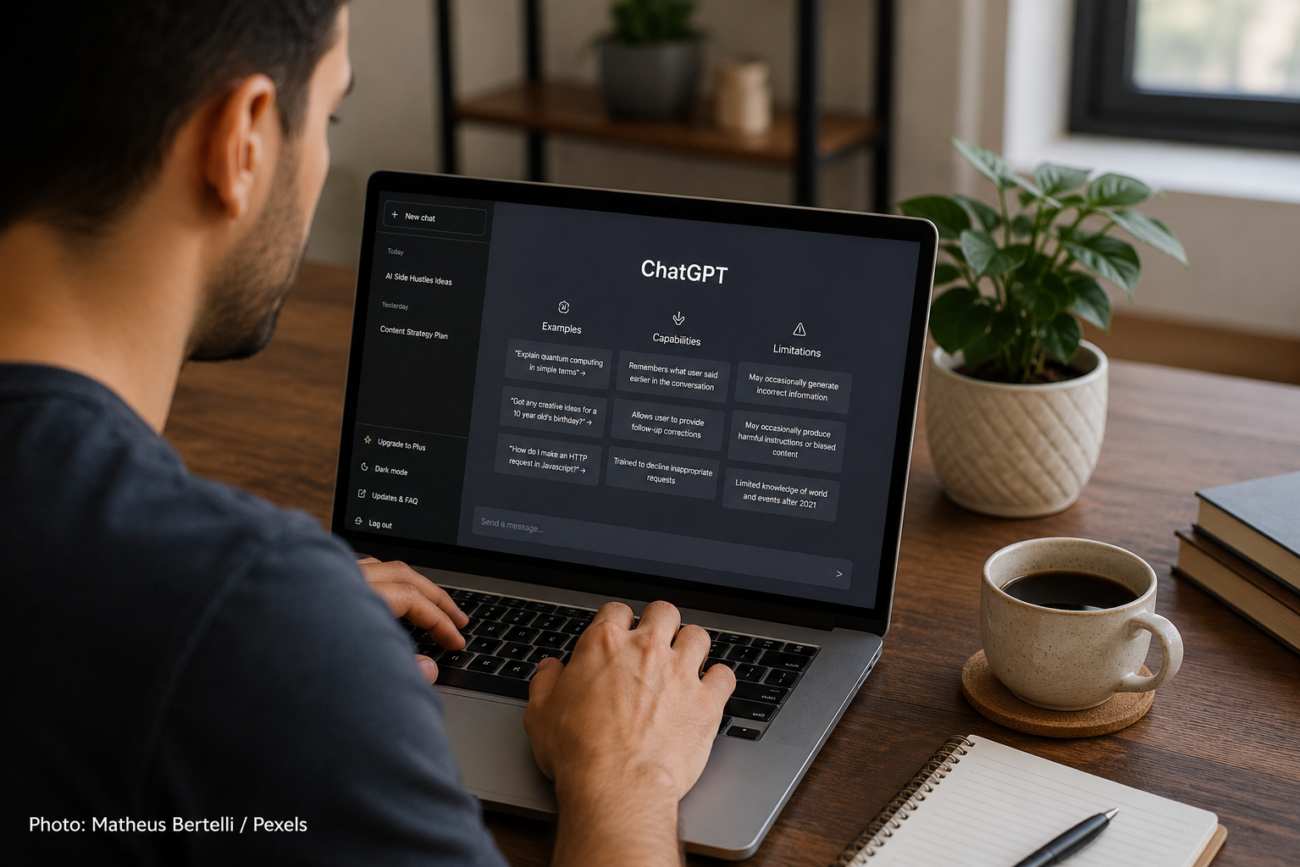
Explore 10 realistic AI side hustles Americans can start in 2026, from freelance services and content creation to automation and digital products.
Artificial intelligence has quietly become part of the daily toolkit for freelancers, remote workers, and small business owners across the United States. What started as a novelty a few years ago — a chatbot that could draft an email or summarize a document — has turned into a practical set of tools that people use to work faster, take on more clients, and offer services that used to require a bigger team.
That shift is opening the door to a new wave of side hustles built around AI. But it’s worth being clear about what that actually means. AI is not a shortcut to income. It doesn’t replace the need for a real skill, a clear offer, or the ability to find and keep clients. What it does is make certain kinds of work more efficient — letting one person do in a few hours what might have taken a full day, or offer a service that would have been out of reach without technical help.
This article looks at ten realistic ways Americans are using AI to build extra income in 2026, along with what each one actually requires, the mistakes worth avoiding, and how to think about choosing the right fit.
Why AI Side Hustles Are Growing in 2026
The growth isn’t happening in a vacuum. According to the U.S. Chamber of Commerce, generative AI use among small businesses nearly tripled between 2023 and 2025, and a large share of small business owners now say they use AI tools on a regular basis. Much of that adoption is concentrated in exactly the kind of work side hustlers are stepping in to help with: content creation, customer communication, and administrative tasks that eat up time small teams don’t have.
At the same time, data from Upwork and other freelance platforms shows that AI-related freelance work has grown significantly faster than the freelance market overall, and that workers with AI-related skills are commanding higher rates than those without them.
That combination — businesses wanting AI help, and not always having the time or knowledge to implement it themselves — is where most of the opportunities below come from. The limitation is just as real: AI tools still require judgment, quality control, and a human who understands the client’s actual goals. Businesses that have tried to skip that step and rely on raw AI output are often the ones creating demand for people who can do it properly.
1. AI Content Creation Services
Small businesses and solo entrepreneurs increasingly need a steady stream of blog posts, newsletters, and social media captions, but few have the time to produce it all themselves. This is one of the more accessible AI side hustles: using tools like ChatGPT or Claude to draft content faster, then applying editing, fact-checking, and a real understanding of the client’s voice and audience.
The value isn’t in generating text — anyone can do that for free. It’s in knowing what to keep, what to cut, and how to make AI-assisted content sound like it came from a person who understands the brand. Clients paying for this service are really paying for judgment, not just output.
2. AI-Powered Freelance Writing
For writers who already have experience with blog posts, web copy, or long-form articles, AI can serve as a research and drafting assistant rather than a replacement. It’s useful for brainstorming angles, organizing an outline, or getting past a blank page — but the final piece still needs a writer’s structure, voice, and accuracy checks.
Freelance writers who lean too heavily on unedited AI output tend to produce generic content that reads the same as everyone else’s. The writers doing well with this side hustle in 2026 are the ones using AI to work faster while keeping their own perspective and editing standards intact.
3. AI Social Media Management
Many small businesses know they should be posting consistently but don’t have the bandwidth to plan content, write captions, and track what’s working. AI tools can help draft a month of post ideas, suggest captions in a specific brand tone, and summarize which types of content are getting engagement.
This side hustle works well as a recurring, retainer-based service rather than a one-off project, since social media management is inherently ongoing. The AI tools handle the repetitive drafting; the person running the account still needs to understand the platform, the client’s audience, and how to adjust strategy based on results.
4. AI Video Creation and Repurposing
Video remains one of the most in-demand content formats, but producing it from scratch is time-consuming. AI tools now make it possible to turn a single long-form video, podcast episode, or webinar into short clips, captions, and platform-specific formats for Instagram, TikTok, or YouTube Shorts.
This is a good fit for people with some editing background who want to add AI tools to speed up their workflow rather than learning video editing from zero. Clients — especially podcasters, coaches, and course creators — often need this done regularly, which can turn into steady repeat work.
5. AI SEO Services
Search engine optimization has always required a mix of research, writing, and technical understanding, and AI tools have made parts of that process faster. AI can help identify keyword opportunities, group topics into content clusters, and draft outlines based on what’s already ranking.
That said, SEO is one of the areas where human judgment still matters most. Search platforms have become more sophisticated at identifying low-quality, mass-produced AI content, and businesses that publish it without real editing risk being penalized. The side hustle opportunity here belongs to people who understand SEO fundamentals and use AI as a research shortcut, not as the entire strategy.
6. AI Chatbot Setup for Small Businesses
Many small businesses want to offer faster customer service but can’t staff a support team around the clock. Setting up a basic AI chatbot — one that answers frequently asked questions, captures leads, or routes customers to the right page — has become a specific, sellable skill.
This doesn’t require a background in software engineering. Most small business chatbot platforms are built for non-technical users, and the real value a freelancer adds is understanding the business well enough to write good responses and set the chatbot up correctly the first time.
7. AI Automation Services
Beyond chatbots, many small businesses have repetitive tasks that eat up hours each week: sorting leads, sending follow-up emails, updating spreadsheets, or moving information between apps. AI-powered automation tools can handle a lot of this work once it’s set up properly.
Freelancers offering this service typically map out a business’s repetitive tasks, then build simple automations using no-code tools paired with AI. It’s a more technical side hustle than some of the others on this list, but it can also command higher rates because it directly saves clients time and money.
8. AI-Powered Virtual Assistance
Virtual assistants have long handled scheduling, inbox management, research, and administrative support for busy entrepreneurs. AI tools now let VAs take on more of that workload in less time — drafting email replies for approval, summarizing long documents, or organizing research into a usable format.
This is a solid entry point for people who are organized and comfortable managing someone else’s priorities, since the core skill set — communication, reliability, and attention to detail — hasn’t changed. AI just makes it possible to handle more for the same number of hours.
9. AI Digital Products
Creating and selling digital products — templates, checklists, guides, spreadsheets, or short educational resources — is another way people are using AI to work faster on things they were already capable of making. AI can help draft a first version of a workbook or outline a guide, but the products that actually sell are the ones built around a specific, useful problem and refined with real expertise.
This side hustle tends to reward people who already have some authority or experience in a niche, since buyers are paying for a shortcut to something useful, not just a generic AI-generated file. Quality and genuine usefulness matter more here than volume.
10. AI-Powered Research Services
Entrepreneurs and small business owners often need research — competitor analysis, market trends, or background on a new market — but don’t have time to do it themselves. AI tools can speed up the process of gathering and organizing information, but the value a freelancer provides is verifying that information, filtering out anything unreliable, and presenting it in a clear, decision-ready format.
This is an important distinction: AI can produce information quickly, but it can also get things wrong. Anyone offering research services needs to fact-check anything that matters before handing it to a client — reputation depends on accuracy, not speed alone.
How to Choose the Right AI Side Hustle
There’s no single “best” option among the ten above — the right fit depends on your existing skills, the time you have available, and how much risk you’re comfortable taking on. The table below breaks down how these side hustles compare on startup cost, skill level, client potential, and scalability:
| AI Side Hustle | Startup Cost | Skill Level | Client Potential | Scalability |
|---|---|---|---|---|
| AI Content Creation | Low | Beginner | High | Medium |
| AI Freelance Writing | Low | Beginner | High | Medium |
| AI Social Media Management | Low | Intermediate | High | Medium |
| AI Video Repurposing | Low–Medium | Intermediate | High | High |
| AI SEO Services | Low–Medium | Advanced | High | High |
| AI Chatbot Setup | Medium | Intermediate | High | High |
| AI Automation | Medium | Advanced | High | Very High |
| AI Virtual Assistance | Low | Beginner | High | Low |
| AI Digital Products | Low | Intermediate | Medium | Very High |
| AI Research Services | Low | Intermediate | Medium | Medium |
A few patterns stand out. Options with a lower barrier to entry — content creation, freelance writing, virtual assistance — tend to have more moderate scalability, since income is still tied fairly directly to hours worked. Services that require more technical skill, like automation and chatbot setup, generally offer more room to grow without a proportional increase in time. Digital products stand out for scalability but bring more moderate client demand, since selling a product requires a different kind of marketing than selling a service.
Matching the side hustle to your actual strengths — rather than picking whichever one sounds the most in-demand — tends to make the difference between something that sticks and something that gets abandoned after a few weeks.
What You Need to Get Started
None of the side hustles above require an expensive setup. At a minimum, most people starting out need a reliable computer and internet connection, a subscription to at least one AI tool suited to the work, and a specific skill or area of knowledge that can be turned into a service. Beyond that, a simple way to find clients matters just as much as the technical setup — whether that’s a basic portfolio, a profile on a freelance platform, or reaching out directly to small businesses in a specific niche.
It’s also worth setting aside time to actually learn the AI tools being used, rather than assuming they’ll produce good results with no guidance. The freelancers getting the most out of AI in 2026 are generally the ones who’ve spent time understanding how to prompt effectively and where the tools tend to fall short.
The Biggest Mistakes to Avoid
A few patterns show up repeatedly among people who try an AI side hustle and don’t get far with it:
Relying entirely on AI output. Clients can usually tell when content, research, or responses haven’t been reviewed by a human. Treating AI as a starting point rather than a finished product is what separates a sustainable service from one that loses clients quickly.
Producing generic, unedited content. AI tools tend to default to similar phrasing and structure unless directed otherwise. Content that isn’t shaped to a specific brand or audience tends to blend into the background.
Skipping fact-checking. AI tools can generate information that sounds accurate but isn’t. This is especially risky in research, SEO, and content services, where a factual error can damage a client relationship.
Trying to offer too many services at once. Spreading a new side hustle across content creation, chatbot setup, automation, and research all at the same time makes it hard to build real expertise in any one of them. Most people do better narrowing their focus, at least at the start.
Believing in fast, guaranteed income. Realistic expectations matter. Results depend on the quality of the work, how much time is invested, demand in a chosen niche, and the ability to consistently find and retain clients — not on the AI tools themselves.
Final Thoughts
AI has genuinely changed what’s possible for a side hustle in 2026, mostly by making it easier for one person to do work that used to require a team. But the tools themselves aren’t the business — they’re a way to work faster and take on more, provided there’s a real skill and a clear offer behind them.
Anyone considering one of the ideas above should treat it the way they’d treat any other side income project: start small, focus on one service long enough to get good at it, and reinvest the time saved into building something that genuinely helps clients. Extra income built this way tends to grow slowly rather than overnight, but that’s also usually what makes it last. For anyone thinking further ahead, the same principle behind seven side businesses that eventually reached seven figures applies here too: the ones that worked started small, stayed close to real demand, and grew based on evidence rather than guesswork.
Disclaimer: The information provided by Lenadre is for educational and informational purposes only and should not be considered financial, investment, tax, or legal advice.
Explore More on Lenadre
Looking for more ways to build extra income? Visit our Extra Income section for practical ideas, browse Success Stories for real examples of people who’ve built something from scratch, or check out Opportunity for a broader look at emerging ways to earn.
Sources
- U.S. Chamber of Commerce, “Generative AI Adoption Among Small Businesses,” 2025.
- Upwork, “Future Workforce Index,” 2025–2026.
- Intuit QuickBooks Small Business Insights, 2025.

One thought on “10 AI Side Hustles Americans Can Start in 2026”