
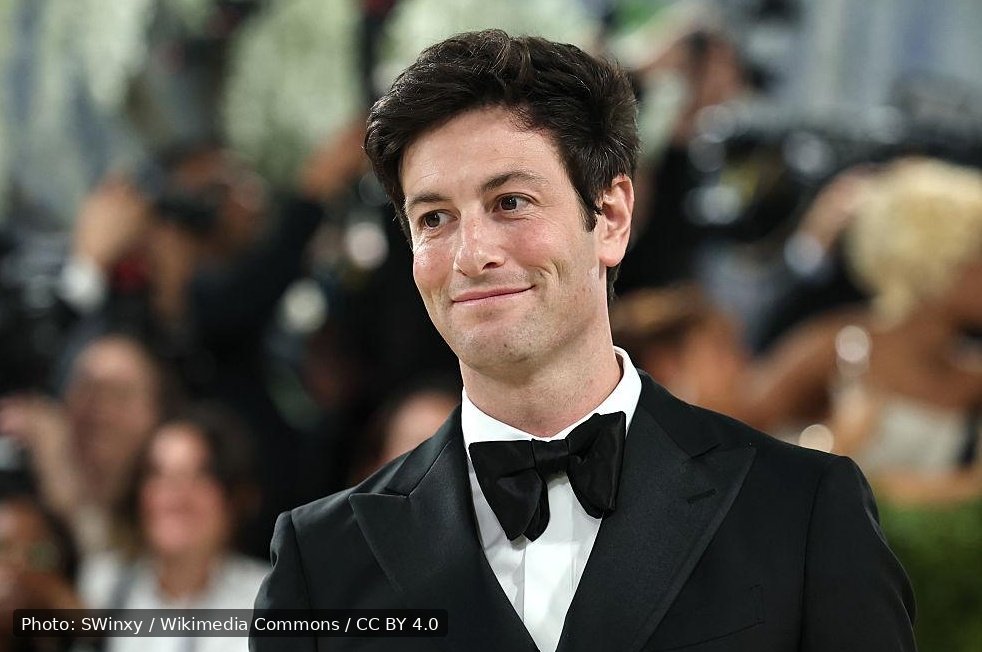
Few venture capitalists have had a year like Josh Kushner. Between a fortune that nearly tripled, a record-breaking bid for an NBA franchise, and a canceled deal with FIFA that triggered a legal fight in Europe, the 41-year-old founder of Thrive Capital has spent 2026 turning a famously low-profile career into front-page news.
His story is not just about a surname. It is about two decades of early bets on companies that reshaped entire industries, and what happens when private wealth suddenly becomes public spectacle.
Who Is Josh Kushner?
Josh Kushner was born in June 1985 in Livingston, New Jersey, the youngest of four children in a family already known for real estate. His father, Charles Kushner, built Kushner Companies into one of the largest property developers in the New York area. His older brother, Jared Kushner, served as a senior White House adviser during Donald Trump’s first term and is married to Ivanka Trump.
Josh took a different route. He studied at Harvard University, earning both an undergraduate degree and an MBA from Harvard Business School. Rather than joining the family real estate business, he spent a short stint on Goldman Sachs’ private equity desk before striking out on his own at just 24 years old.
That decision would eventually make him the wealthiest member of the Kushner family, by a wide margin.
Thrive Capital: From a $5 Million Fund to a $65 Billion Powerhouse
In 2009, Kushner founded Thrive Capital with a modest $5 million fund seeded by Joel Cutler, co-founder of the venture firm General Catalyst. The firm focused on software and internet companies, a niche that was still considered risky by many traditional investors at the time.
Thrive’s timing proved remarkable. Early positions in Instagram, Twitch, GitHub, Stripe, Spotify, Slack, and Robinhood turned the firm into one of the most closely watched names in venture capital. Its exits, including Twitch’s sale to Amazon and GitHub’s $7.5 billion acquisition by Microsoft, cemented its reputation.
The growth has only accelerated. By the end of 2024, Thrive managed roughly $23 billion in assets. That figure jumped to $50 billion by mid-2026 and then to more than $65 billion by August, according to an investor letter obtained by Bloomberg. In February 2026, the firm closed its tenth flagship fund at more than $10 billion, one of the largest venture raises in recent history.
The AI and Aerospace Bets Behind the Surge
Much of that growth traces back to two names: OpenAI and SpaceX.
Thrive’s early stake in SpaceX ballooned in value after the company’s IPO in June 2026, reportedly reaching roughly $10 billion. Its position in AI coding tool Cursor, a 7% stake, was valued at $4.2 billion following a $60 billion acquisition deal. Combined with its early conviction in OpenAI, these bets placed Thrive at the center of two of the decade’s biggest technology narratives: artificial intelligence and the commercialization of space.
Billionaire investor Marc Andreessen once told Forbes that Thrive had “one of the shortest trajectories from inception to top-tier status” he had seen in venture capital. Nearly two decades later, that trajectory has translated into one of the fastest individual wealth increases on record.
Net Worth: From $5.2 Billion to $16.7 Billion in a Single Year
According to Forbes, Kushner’s personal net worth was estimated at $5.2 billion in 2025. By August 2026, that figure had climbed to an estimated $16.7 billion, more than tripling in twelve months.
The jump is not tied to a single windfall. It reflects the revaluation of Thrive Capital itself, driven by the firm’s expanding assets under management and the rising worth of its portfolio companies. Kushner is estimated to hold a roughly 66% stake in Thrive, according to Forbes, which means the firm’s growth flows directly into his personal balance sheet.
It is worth noting that private wealth estimates like these come with real limits. Because so much of Kushner’s fortune is tied to Thrive’s private holdings rather than publicly traded stock, exact figures vary between outlets and shift as new funding rounds and valuations emerge.
The $12.5 Billion Lakers Deal
On August 12, 2026, news broke that the Los Angeles Lakers were being sold to former Disney CEO Bob Iger and Kushner for a record $12.5 billion, the highest valuation ever attached to a professional sports franchise sale. The deal still requires approval from the NBA.
What stood out to many observers was Kushner’s reaction, or lack of one. On the same day the Lakers news broke, he used his social media account to celebrate a different transaction entirely: a $2 billion raise for Thrive Holdings, a company he founded in 2025 to acquire and modernize service businesses using AI. Investors in that round included SoftBank. He made no public mention of the Lakers deal at all.
It was a fitting moment for a summer that also saw Kushner attend Taylor Swift and Travis Kelce’s wedding at Madison Square Garden alongside his wife, and later appear at the Allen & Co. conference in Sun Valley, Idaho, often described as a “summer camp for billionaires,” where he was photographed with OpenAI president Greg Brockman.
The FIFA Controversy That Sparked a Legal Fight
Not every headline this year has been positive. In July 2026, FIFA named Kushner’s Thrive Eternal, a subsidiary of Thrive Capital, to lead a group of private investors in a plan to sell a minority stake in a new commercial subsidiary tied to World Cup revenue, including broadcasting, sponsorship, and ticketing rights.
The proposal, reportedly aiming to raise as much as $4.2 billion, triggered an immediate backlash. Every major European national federation threatened to boycott FIFA-organized competitions, and UEFA formally objected to the plan within days. FIFA scrapped the proposal shortly after it became public.
The fallout did not end there. UEFA later filed a discovery application in U.S. federal court seeking records from Thrive Capital and Kushner personally, along with FIFA president Gianni Infantino and former Liberty Media CEO Greg Maffei, as part of a possible criminal complaint in Switzerland. Kushner and Thrive are not expected to be named as defendants, but the filing keeps his name tied to the controversy.
Critics pointed to Kushner’s family ties to Donald Trump as part of what made the deal so sensitive, even though Kushner himself has no formal political role.
Family Ties: The Kushner Name and Political Connections
The Kushner surname carries weight well beyond Josh’s own career. His brother Jared served as a White House adviser and later helped negotiate a Gaza ceasefire agreement in late 2025. Their father, Charles Kushner, was appointed U.S. ambassador to France and Monaco in 2025, years after receiving a presidential pardon for a 2005 conviction on charges including tax fraud and witness tampering.
Josh has largely stayed out of politics publicly. He is reported to be a donor to Democratic causes, a notable contrast within a family closely associated with the Trump administration. That contrast is part of why his business dealings, including the FIFA plan, drew extra scrutiny.
Personal Life: Karlie Kloss and a Low-Key Lifestyle
Despite the scale of his fortune, Kushner has kept a famously private personal profile. He is married to model and entrepreneur Karlie Kloss, whom he wed in 2018. The couple has three children, including a daughter born in September 2025.
Kushner’s own social media presence reflects that low profile: most of his public posts feature his family or landscapes rather than himself. It is a notable contrast to a year in which his business decisions have repeatedly made global headlines.
What Josh Kushner’s Rise Says About Building Long-Term Wealth
Kushner’s path is a reminder that outsized fortunes are rarely built overnight, even when the headlines make it look that way. Thrive Capital spent 16 years compounding a small fund into a $65 billion firm before this year’s dramatic revaluation. The AI and aerospace bets that drove his 2026 surge were made years, in some cases over a decade, before they paid off.
That kind of patience and conviction shows up again and again in stories of founders who reshaped entire industries. Jensen Huang’s journey from a technology bet made decades before it paid off to leading the world’s most valuable company follows a similar arc: early conviction, sustained through years most people would have given up on.
This article is for informational purposes only and does not constitute financial or investment advice. Net worth estimates are based on third-party reporting and can vary depending on valuation methods and timing. Always do your own research or consult a licensed financial advisor before making investment decisions.
Explore More on Lenadre
Curious about how other entrepreneurs built their fortunes, or looking for ways to grow your own income? Check out more stories in our Success Stories and Extra Income sections, or visit News for the latest on business and finance.

One thought on “Who Is Josh Kushner? Inside the Billionaire’s $16.7 Billion Rise With Thrive Capital”